Patients are sometimes told that once a cataract becomes very hard or advanced, phacoemulsification may no longer be possible.
That is not always true.
A hard or dense cataract can make surgery more challenging, but many such cataracts can still be managed using phacoemulsification when the eye is carefully evaluated and the surgical plan is adapted to the individual case.
The key is not simply using “more power.” It is understanding the eye before surgery and combining appropriate surgical techniques, energy management and protection of delicate structures such as the corneal endothelium.
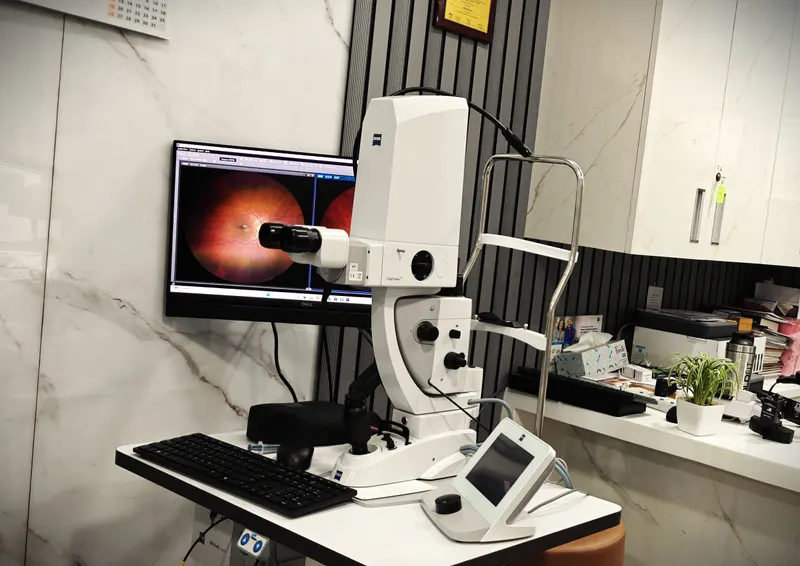
At Madhavi Netralaya in Ara, cataract care includes detailed pre-operative evaluation and access to technologies such as specular microscopy, MiLOOP and the ZEISS QUATERA 700 phaco system.
What Is a Hard Cataract?
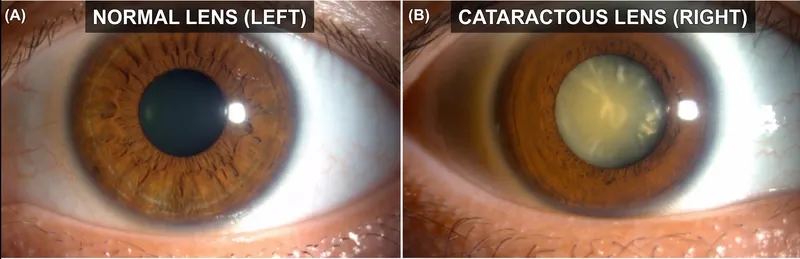
A cataract occurs when the natural lens inside the eye becomes cloudy.
As some cataracts progress, the central nucleus of the lens can become increasingly dense and hard. Patients may hear terms such as:
- hard cataract
- dense cataract
- mature cataract
- hard nuclear cataract
- brunescent cataract
These terms are not always interchangeable medically, but from a patient’s point of view they generally describe a cataract that has become significantly advanced or dense.
Harder nuclei can require more surgical energy and manipulation during phacoemulsification than softer cataracts. Research has linked increasing nuclear hardness with greater surgical demands and potentially greater stress on the corneal endothelium.
That is why planning becomes especially important.
Myth: “Phaco Cannot Be Done in a Hard Cataract”
Reality: Many hard cataracts can still be treated with phacoemulsification
Phacoemulsification uses ultrasound energy to break the cloudy natural lens into smaller pieces so it can be removed through a small incision.
A hard cataract may require a different surgical strategy than an ordinary cataract, but hardness alone does not automatically mean that phacoemulsification cannot be performed.
The surgeon needs to consider factors such as:
- cataract density
- corneal health
- endothelial cell status
- anterior chamber depth
- pupil size
- zonular stability
- other diseases affecting the eye
- the safest method of dividing and removing the nucleus
The right technique is therefore case-specific.
Why the Corneal Endothelium Matters in Hard Cataract Surgery
The cornea is the clear front window of the eye.
Its innermost layer contains corneal endothelial cells, which play an important role in keeping the cornea clear.
These cells have limited regenerative ability. If the endothelial reserve is already low, additional surgical stress may increase the risk of postoperative corneal swelling or delayed visual recovery.
Dense cataracts can require greater ultrasound energy or longer manipulation, which is one reason endothelial protection becomes particularly relevant in challenging cases.
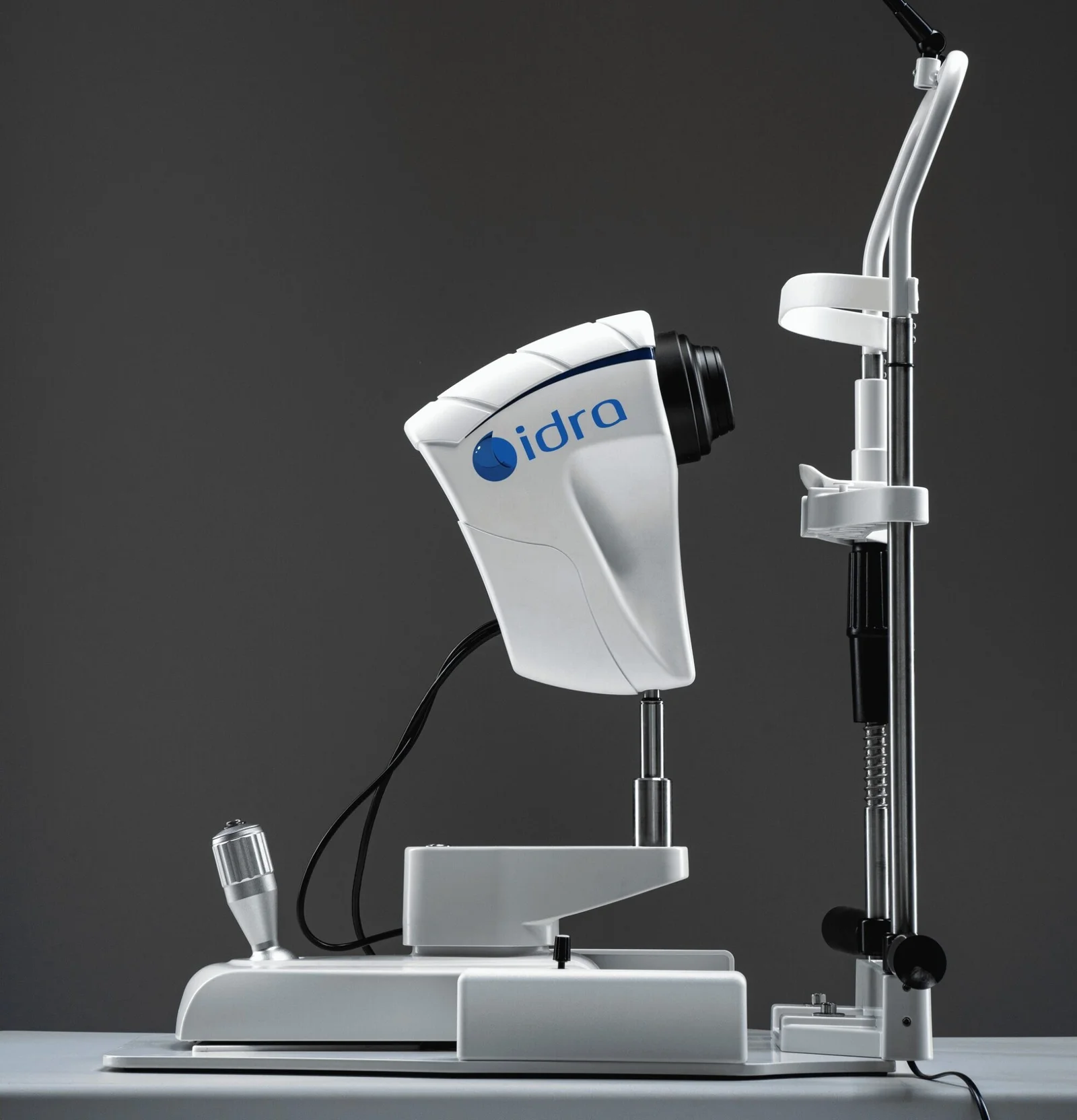
What Is Specular Microscopy?
Specular microscopy is a non-contact diagnostic test that allows the eye-care team to examine and measure corneal endothelial cells.
It can provide information about:
- endothelial cell density
- cell size and shape
- overall endothelial health
In selected patients, this information helps the surgeon understand how much endothelial reserve is present before cataract surgery and can influence surgical planning. Clinical reviews support pre-operative endothelial assessment in eyes where corneal health may affect cataract-surgery decision-making.
At Madhavi Netralaya, pre-operative cataract evaluation can include specular microscopy when clinically indicated.
Why Anterior Chamber Depth and Complete Eye Evaluation Matter
The surgeon does not plan hard cataract surgery by looking only at the cataract.
The entire anterior segment of the eye matters.
For example, a shallow anterior chamber means surgical activity occurs closer to the corneal endothelium. Other factors—including pupil size, zonular stability, corneal status and cataract density—can also influence technique and risk.
This is why a detailed examination before surgery is an important part of managing advanced cataracts.
MiLOOP: Helping Divide a Dense Cataract Nucleus
One challenge in hard cataract surgery is dividing a very dense nucleus into manageable pieces.
MiLOOP is a micro-interventional device that uses a thin nitinol filament loop to mechanically segment the cataract nucleus.
A randomized controlled study of moderate-to-severe cataracts found that MiLOOP-assisted pre-fragmentation reduced the ultrasound energy needed during subsequent phacoemulsification compared with phacoemulsification alone in that study population.
This does not mean MiLOOP is required for every cataract.
It is an additional surgical tool that may be useful in selected dense or hard cataract cases depending on the surgeon’s assessment.
Why Energy Management Matters
A common misconception is that a hard cataract simply needs more phaco power.
Modern cataract surgery is more sophisticated than that.
The goal is to deliver ultrasound energy efficiently while maintaining control of the eye’s internal environment.
The ZEISS QUATERA 700 system incorporates automated ultrasound Power on Demand and the QUATTRO Pump fluidics system, along with integration into the ZEISS cataract workflow.
Madhavi Netralaya lists the ZEISS QUATERA 700 among its cataract surgical technology.
For a hard cataract, the practical goal is not maximum energy. It is appropriate energy, stable fluidics and an efficient surgical strategy.
Corneal Protection During Surgery
Cataract surgeons use ophthalmic viscosurgical devices, or OVDs, during surgery.
Among their functions, OVDs help maintain space inside the eye and protect intraocular tissues, including the corneal endothelium.
Clinical reviews and meta-analyses support the role of OVDs in endothelial protection during cataract surgery, especially in challenging cases.
In a hard cataract, corneal protection is therefore part of the overall strategy rather than an afterthought.
A Better Way to Think About Hard Cataract Surgery
Instead of asking:
“Can a hard cataract be operated?”
a more useful question is:
“What does this particular eye need for cataract surgery to be planned appropriately?”
A thoughtful hard cataract workflow can be summarized as:
- Assess — Evaluate the cataract and the rest of the eye.
- Check the cornea — Assess endothelial health when clinically appropriate.
- Plan nucleus management — Determine how the dense cataract will be divided and removed.
- Manage surgical energy — Use an appropriate phaco strategy and technology.
- Protect the cornea — Use appropriate intra-operative measures to protect delicate structures.
- Individualize the operation — No two hard cataracts are exactly the same.
Should You Wait Until a Cataract Becomes “Fully Ripe”?
Generally, patients do not need to wait for a cataract to become extremely dense before seeking an ophthalmic assessment.
Cataract surgery is usually considered according to how much the cataract affects vision, daily activities and the overall condition of the eye—not according to a particular season or the idea that every cataract must first become “fully ripe.”
Waiting until vision becomes extremely poor may allow the cataract to become denser and potentially make surgery more challenging.
If your vision is progressively worsening, it is sensible to have the eye evaluated rather than waiting for an arbitrary stage.
Can You Monitor Vision at Home?
A simple way to notice change is to compare each eye separately from time to time.
For example:
- look at the same familiar object
- stand at approximately the same distance
- cover one eye
- observe the object
- repeat with the other eye
- compare again after a few weeks
This is not a diagnostic test and cannot tell you whether you need surgery.
It is simply a way to notice whether one eye seems to be changing.
If vision is becoming progressively blurred, glare is increasing, night vision is becoming difficult, or routine activities are being affected, arrange an eye examination.
Hard Cataract Treatment at Madhavi Netralaya, Ara
Madhavi Netralaya provides cataract evaluation and surgery in Ara, Bihar. The hospital’s technology suite includes systems used across the cataract workflow, including ZEISS IOLMaster 700, ZEISS Lumera i, Callisto Eye and ZEISS QUATERA 700.
For selected advanced or hard cataract cases, planning may also involve:
- detailed pre-operative evaluation
- specular microscopy
- assessment of corneal endothelial health
- MiLOOP-assisted nucleus management where appropriate
- modern phaco energy management
- corneal protection strategies
The exact surgical approach is decided only after examining the individual eye. Meet our consultants Dr. Nilesh Kumar and Dr. Kanhaiya Singh, or explore IOL options in our vision simulator.
Frequently Asked Questions About Hard Cataract
Can phaco surgery be done in a hard cataract?
In many cases, yes. A dense cataract may require additional planning, techniques or technology, but hardness alone does not automatically rule out phacoemulsification.
Is hard cataract surgery more risky?
A hard cataract may be more technically challenging. Risk depends on cataract density, corneal health and several other features of the eye. A detailed examination is required to estimate individual risk.
Should I wait until my cataract becomes completely mature?
Not necessarily. Surgical timing is usually based on visual difficulty, eye health and clinical assessment rather than waiting for an arbitrary degree of maturity.
Why is endothelial cell count checked?
The corneal endothelium helps keep the cornea clear. A low endothelial reserve can affect surgical planning and postoperative expectations.
Does MiLOOP replace phacoemulsification?
No. MiLOOP is an adjunct that can help mechanically segment a dense nucleus in selected cases; subsequent lens removal still requires an appropriate surgical technique.
Is every hard cataract treated in the same way?
No. Cataract density is only one part of the assessment. The surgical plan must be individualized.
When Should You Book an Eye Evaluation?
Consider an ophthalmic consultation if cataract-related vision is causing:
- progressive blurring
- glare or halos
- difficulty driving at night
- trouble reading
- reduced contrast
- difficulty recognizing faces
- increasing dependence on others for daily activities
You do not have to wait for vision to become extremely poor before getting advice. Browse our cataract and hospital FAQs for more practical answers.
Book a Cataract Consultation in Ara
If you or a family member has been told that the cataract is hard, dense, mature or advanced, a detailed evaluation can help determine the most appropriate surgical strategy.
Madhavi Netralaya, Ara
Near Maharaja College Gate, South Ramna Road, Ara, Bihar 802301
24/7 Toll-Free: 1800-571-9090
Book an online appointment.
Important: This article provides general education and does not replace examination by an ophthalmologist.