If you have a high spectacle or contact-lens prescription, you may have wondered whether there are refractive options beyond glasses and contact lenses.
One option that may be considered for appropriately selected patients is a Phakic Intraocular Lens (Phakic IOL), sometimes discussed in the context of implantable lenses or ICLs.
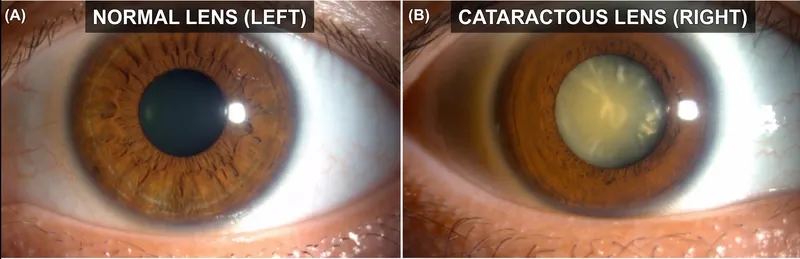
Unlike the artificial lens used after removing the natural lens during cataract surgery, a Phakic IOL is implanted while the eye's natural crystalline lens remains in place.
However, Phakic IOL is not suitable for everyone. The decision requires a detailed eye examination, appropriate measurements, discussion of alternatives, and an individual assessment of benefits and risks.
This guide explains what Phakic IOL is, its potential benefits, how suitability is evaluated, and the questions patients commonly ask.
What Is a Phakic IOL?
A Phakic Intraocular Lens is an artificial lens implanted inside an eye that still has its natural crystalline lens.
The word "phakic" is important: it indicates that the natural lens has not been removed.
The purpose of the additional lens is to provide refractive correction and reduce dependence on glasses or contact lenses in appropriately selected patients.
Phakic IOL vs Lens Replacement
These are different concepts.
Phakic IOL:
- The natural crystalline lens remains in the eye.
- An additional lens is implanted for refractive correction.
- Patient selection and detailed pre-operative evaluation are essential.
Lens replacement/cataract surgery:
- The natural crystalline lens is removed.
- An artificial intraocular lens replaces it.
Therefore:
Phakic IOL ≠ Natural Lens Replacement
Why Is Phakic IOL Discussed for High Refractive Power?
People with higher refractive errors may sometimes want to explore options beyond spectacles or contact lenses.
For some appropriately selected patients, a Phakic IOL may be one of the refractive options considered.
Importantly:
High spectacle power alone does not make someone a Phakic IOL candidate.
A complete evaluation is necessary to determine whether the procedure may be appropriate for an individual eye. Learn more about refractive options at Madhavi Netralaya.
Potential Benefits of Phakic IOL
1. The Natural Lens Is Retained
A defining feature of Phakic IOL surgery is that the eye's natural crystalline lens is retained.
The additional lens provides refractive correction without replacing the natural crystalline lens.
2. No Corneal Tissue Removal for the Refractive Correction
Phakic IOL is an intraocular approach.
Unlike corneal laser procedures that achieve refractive correction by reshaping corneal tissue, Phakic IOL correction does not depend on removing corneal tissue to reshape the cornea.
This does not mean one approach is automatically better than another. Different refractive procedures have different indications, benefits, limitations and risks.
The appropriate choice depends on the individual eye.
3. It May Be an Option for Some Patients With Higher Refractive Errors
Phakic IOL may be discussed in appropriately selected patients, including some people with higher refractive errors.
However, the prescription is only one part of the decision.
Eye anatomy, ocular health, refractive stability and other clinical factors also matter.
4. It Provides Another Refractive Option
If one refractive approach is not considered appropriate for an individual eye, that does not necessarily mean the discussion has ended.
Other options may sometimes be evaluated.
But an important principle remains:
Not suitable for one procedure ≠ automatically suitable for Phakic IOL.
The eye must be evaluated independently for each option.
Who May Be Suitable for a Phakic IOL?
There is no simple online questionnaire that can determine Phakic IOL suitability.
An ophthalmologist needs to consider the complete clinical picture.
Assessment may include factors such as:
- refractive error;
- stability of the prescription;
- measurements of the eye;
- anterior-segment anatomy;
- corneal and endothelial health;
- pupil characteristics;
- overall ocular health;
- medical and eye history; and
- the risks, benefits and alternatives relevant to that individual.
The exact criteria can also depend on the particular lens being considered and applicable regulatory approval.
The Key Principle
One measurement does not determine candidacy.
The appropriate sequence is:
Measure → Assess → Discuss Options → Individual Decision
What Eye Tests May Be Needed Before Phakic IOL?
A detailed pre-operative assessment is important before deciding whether an intraocular refractive procedure is appropriate.
Depending on the clinical setting and technology available, multiple measurements and examinations may be used.
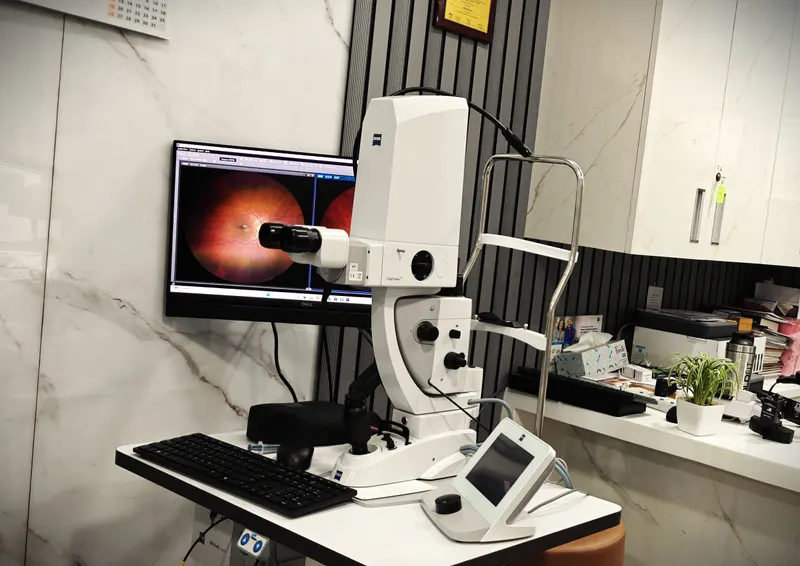
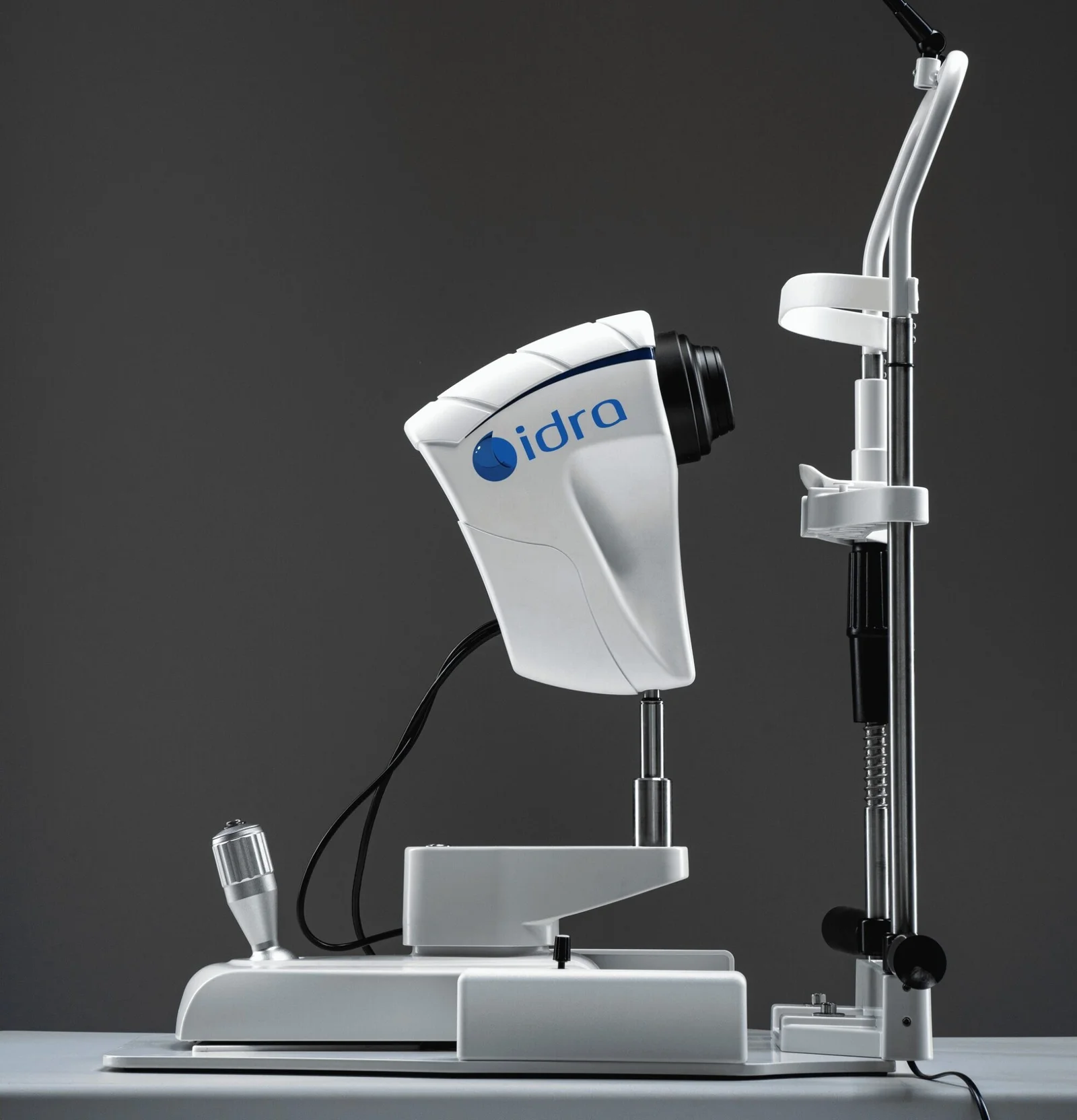
Two technologies discussed in our educational series are Pentacam AXL Wave and Myopia Master.
Role of Pentacam AXL Wave
The Pentacam AXL Wave combines several forms of ocular measurement and analysis.
Its capabilities include anterior-segment tomography and other measurements that can provide detailed information about the eye.
Such information may contribute to pre-operative assessment and surgical planning.
The important point is that the machine provides clinical data.
It does not independently decide whether a patient should receive a Phakic IOL.
Role of Myopia Master
The Myopia Master combines measurements including:
- refraction;
- axial length; and
- keratometry.
Objective refractive information can contribute to understanding the eye's refractive status.
Again, measurements from a device are part of the clinical picture.
Technology Provides Data — Clinical Assessment Builds the Plan
Neither a single measurement nor one machine should be interpreted as automatically determining:
- Phakic IOL candidacy;
- the final treatment;
- implant selection; or
- the expected visual outcome.
The ophthalmologist integrates relevant examination findings, measurements and individual clinical considerations.
What Happens During a Phakic IOL Evaluation?
A Phakic IOL consultation generally starts with a detailed medical and ocular history followed by examination and measurements.
The ophthalmologist may evaluate the patient's refractive error, stability of vision correction, anatomy of the front of the eye, corneal health and other ocular factors.
The purpose is not simply to ask:
"Can a Phakic IOL be implanted?"
A more useful question is:
"Which refractive option, if any, is appropriate for this particular eye?"
Is Phakic IOL the Same as LASIK?
No.
They use fundamentally different approaches.
Corneal laser refractive procedures correct refractive error by changing the shape of the cornea.
A Phakic IOL is an intraocular lens implanted while retaining the natural crystalline lens.
Neither approach is universally "better."
The appropriate option depends on individual clinical findings, expectations, benefits, alternatives and risks.
Does Phakic IOL Guarantee Freedom From Glasses?
No medical procedure should be presented as guaranteeing spectacle independence or a particular visual result.
The objective of a Phakic IOL is refractive correction and potentially reducing dependence on glasses or contact lenses.
Individual outcomes vary, and some patients may still require glasses or contact lenses for certain tasks.
Discuss realistic expectations with your ophthalmologist before making a treatment decision.
What Are the Risks of Phakic IOL Surgery?
Phakic IOL implantation is an intraocular surgical procedure, so understanding potential risks is essential.
Depending on the individual patient and lens, risks can include problems such as:
- glare, halos or other visual symptoms;
- under-correction or over-correction;
- increased intraocular pressure;
- loss of corneal endothelial cells;
- cataract formation;
- inflammation;
- infection;
- retinal complications;
- need for repositioning, replacement or removal of the implanted lens;
- need for additional treatment or surgery; and
- loss of vision in rare or serious complications.
This is not an exhaustive risk list.
The risks relevant to an individual patient should be discussed with the treating ophthalmologist before surgery.
3 Common Myths About Phakic IOL
Myth 1: "Phakic IOL means my natural lens will be removed."
Fact: The natural crystalline lens remains in place in Phakic IOL implantation.
Myth 2: "If my spectacle power is high, I automatically qualify."
Fact: No. High refractive power alone cannot establish candidacy.
A detailed eye evaluation is required.
Myth 3: "If another refractive procedure isn't suitable, Phakic IOL definitely will be."
Fact: No.
Being unsuitable for one refractive procedure does not automatically establish suitability for another.
Each option requires its own clinical assessment.
Quick Self-Check: Should You Discuss Refractive Options?
These questions are not a diagnostic or eligibility test.
They may simply help you decide whether you want to discuss refractive options with an eye-care professional.
Ask yourself:
- Do you have a relatively high spectacle/contact-lens prescription?
- Are you interested in understanding refractive options beyond your current correction?
- Have you previously been told that a particular corneal refractive option may not be appropriate for your eyes?
Even if your answer is YES to all three, it does not mean that you are a Phakic IOL candidate.
It only means that a professional discussion about available options may be worthwhile.
Self-check ≠ Diagnosis
Three YES answers ≠ Phakic IOL candidacy
Phakic IOL FAQs
1. Is the natural lens removed during Phakic IOL surgery?
No. The natural crystalline lens remains in the eye.
2. Can Phakic IOL be considered for high spectacle power?
It may be considered in appropriately selected patients, including some people with higher refractive errors. High power alone, however, does not determine candidacy.
3. How do I know whether I am suitable?
A complete ophthalmic evaluation is required. Suitability depends on multiple individual clinical factors rather than a single prescription number or test.
4. Does Phakic IOL involve corneal tissue removal?
The refractive correction from a Phakic IOL does not rely on removing corneal tissue to reshape the cornea. It is an intraocular approach.
5. Is Phakic IOL completely reversible?
A Phakic IOL can potentially be surgically removed or exchanged, but this should not be described as simple or completely "reversible." Removal is another intraocular procedure, and returning the eye or vision to its exact pre-operative state cannot be guaranteed.
6. Will I definitely stop needing glasses?
No. No particular visual outcome or complete freedom from glasses should be guaranteed.
7. Is Phakic IOL better than LASIK?
There is no universal answer. They are different approaches with different suitability criteria, benefits and risks. The appropriate option depends on the individual eye.
8. Why are detailed measurements important?
Refractive surgery planning requires an accurate understanding of the eye. Measurements provide information that the ophthalmologist interprets alongside the clinical examination and medical history.
9. Can a machine decide whether I need a Phakic IOL?
No.
Diagnostic technology provides useful measurements and information, but treatment decisions require clinical interpretation and individual assessment.
10. What should I ask my ophthalmologist?
Useful questions include:
- What refractive options are appropriate for my eyes?
- Why might Phakic IOL be considered in my case?
- What alternatives are available?
- What are the potential benefits for me?
- What risks are relevant to my eyes?
- Could I still need glasses after treatment?
- What examinations and measurements are required?
- What follow-up will I need?
- What happens if the implanted lens later needs to be repositioned, exchanged or removed?
The Bottom Line
Phakic IOL can provide an additional refractive option for appropriately selected patients while retaining the eye's natural crystalline lens.
Its potential advantages should not be separated from the importance of careful patient selection, detailed measurements, realistic expectations, alternatives and surgical risks.
The most useful question is therefore not:
"Is Phakic IOL the best procedure?"
It is:
"Which refractive option is appropriate for my eyes?"
Understand → Evaluate → Decide
If you are considering refractive correction, discuss your individual options with a qualified ophthalmologist.
Phakic IOL Evaluation at Madhavi Netralaya, Ara
If Phakic IOL is being considered, a detailed eye evaluation can help determine whether it may be an appropriate option for your eyes.
Madhavi Netralaya, Ara
Near Maharaja College Gate, South Ramna Road, Ara, Bihar 802301
24×7 Call: 1800-571-9090
Book your eye check-up · Refractive care · Pentacam AXL Wave
This article is for educational purposes only and is not a substitute for medical advice, diagnosis or treatment. Phakic IOL suitability, benefits, risks and expected outcomes vary between individuals and may also depend on the specific lens being considered. A comprehensive examination by a qualified ophthalmologist is necessary before making a treatment decision.