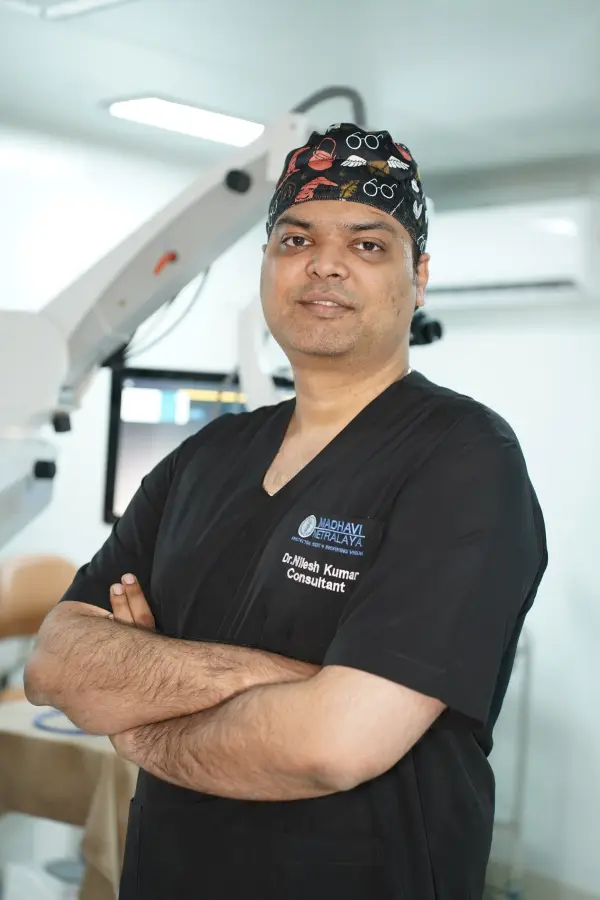
✦ Cataract Surgery

No stitches. No injections. No wait. See Clearly Again
in 10 Minutes.

Cataract surgery today is nothing like what your parents experienced. Powered by the Zeiss Quatera 700 — the most advanced phacoemulsification platform in India — we restore your vision through a micro-incision so small it seals itself, with no stitches and no patch.

Zero stitches Same-day discharge Local anaesthesia only Zeiss Quatera 700 Premium IOL options
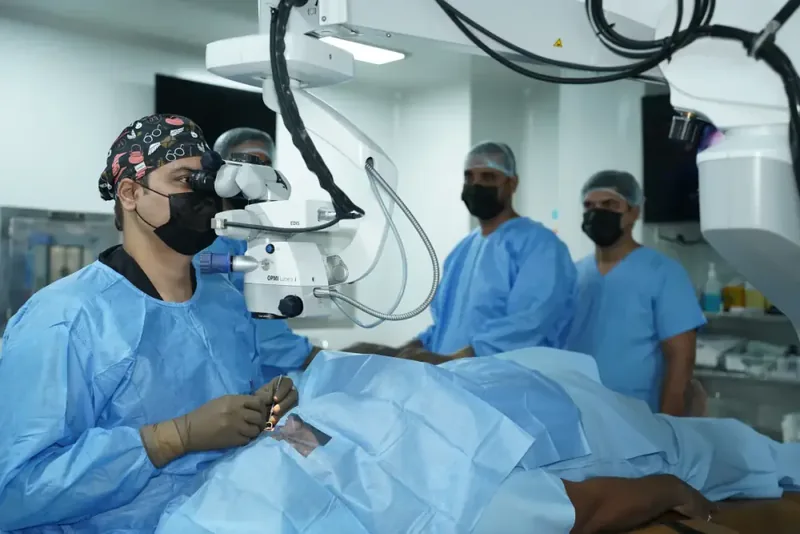
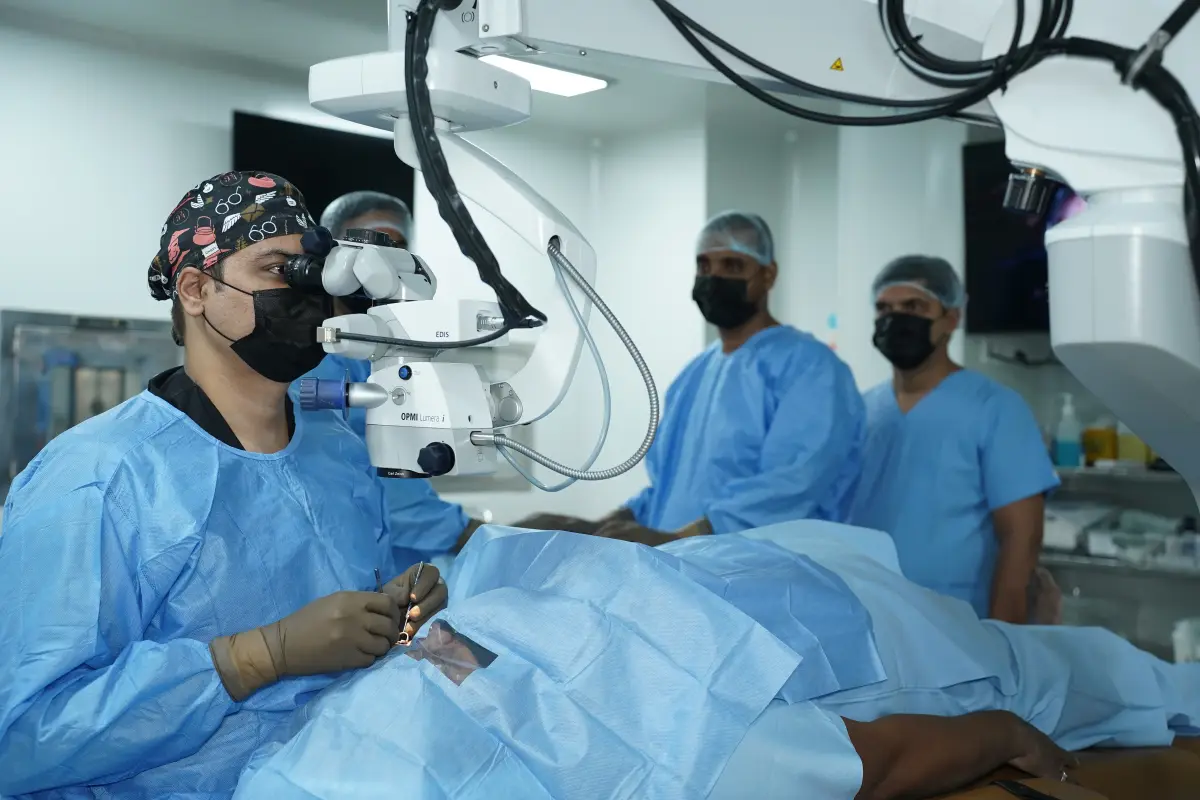
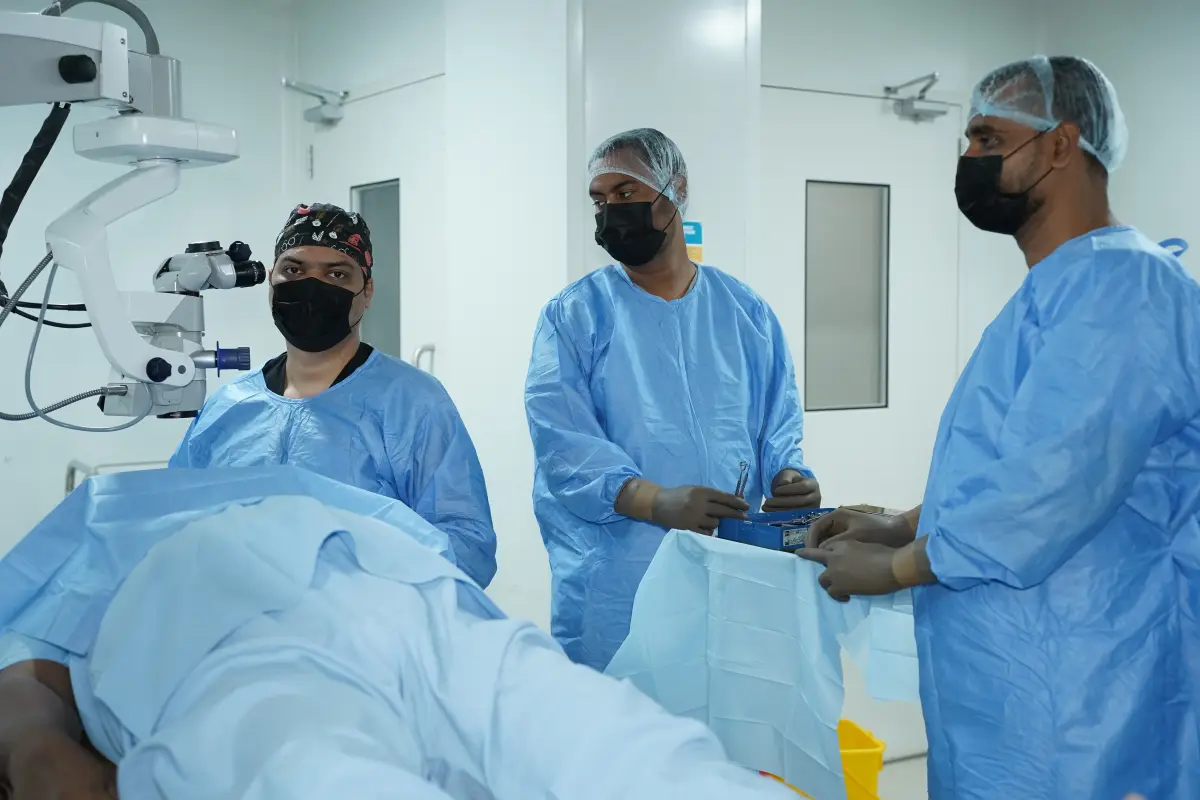
Zeiss Quatera 700 phaco system in the operating theatre
🔬 Zeiss Quatera 700 Phaco System  ·  Zeiss Lumera i Surgical Microscope  ·  Callisto Eye Guidance
What Is a Cataract?

When the Lens Inside Your Eye
Starts to Cloud Over

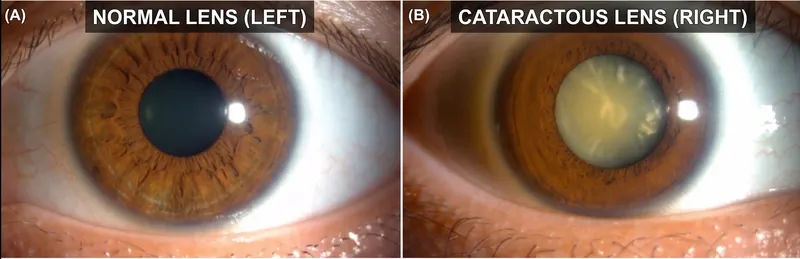
A cataract forms when the natural lens of your eye gradually becomes opaque — like a window that slowly frosts over. Light can no longer pass through cleanly, leading to blurry vision that no glasses can correct.

The good news: cataracts are completely curable. Surgery takes about 10 minutes, requires no injections around the eye, and you can return home the same day with improved vision that often surprises patients the very next morning.

Normal lens versus cataract — side-by-side comparison
📌 Normal lens (left) vs. cataractous lens (right) — clarity you can see in the scan

SYMPTOMS THAT SUGGEST A CATARACT

Blurry or cloudy vision
Objects appear hazy or out of focus, even with updated glasses. Distant signs and faces are hard to read.
Glare and halos at night
Oncoming headlights, streetlights, or bulbs appear to have a starburst or halo around them. Night driving becomes difficult.
Frequent change in glasses power
The lens changes shape as a cataract grows, causing power to shift — sometimes improving near vision temporarily (called "second sight").
Colours appearing faded or yellow
The world may look less vivid. Whites appear yellowish. After surgery, patients are often amazed at how vibrant colours become.
Your Journey

What to Expect — From
Consultation to Clear Vision

We walk with you through every step. No surprises, no confusion — just a clear path from your first visit to waking up with better eyesight.

1
Day 1
Comprehensive Cataract Work-Up
A full baseline evaluation including optical biometry (IOL Master 700), corneal topography, OCT, and a detailed discussion of lens options with your surgeon.
2
Before Surgery
IOL Selection & Pre-Op Counselling
We review your biometry data, discuss your lifestyle, and recommend the right lens category for your eyes and vision goals. Every option is explained clearly.
3
Surgery Day
10-Minute Stitchless Procedure
Under local anaesthetic eye drops only. The Zeiss Quatera 700 gently removes the cloudy lens through a micro-incision and replaces it with your chosen IOL.
4
Same Day
Rest & Go Home
A short rest in our comfortable recovery area, then you're discharged with a protective shield and simple eye drops. Most patients see improvement by the next morning.
5
Follow-Up
Post-Op Review & Discharge
Check-up at Day 1, Week 1, and Week 4. Most patients are fully discharged at four weeks with stable, excellent vision and a prescription for new glasses if needed.
Surgical Options

The Right Surgery for
Your Eyes and Your Life

We perform two types of cataract surgery. Your surgeon will recommend the most appropriate approach based on your cataract grade, pupil size, and overall eye health.

Manual Surgery

Small Incision Cataract Surgery (SICS)

A proven, time-tested technique for advanced cataracts or cases where phacoemulsification is not advisable.

  • Ideal for mature or hypermature cataracts
  • A slightly larger incision — sutured with fine sutures
  • Often recommended when the cataract is too dense for phaco
  • Highly reliable outcomes in experienced hands
  • Compatible with foldable and rigid IOLs
🔬 Performed under the Zeiss Lumera i Surgical Microscope
Ask your surgeon if SICS is right for you →
Combined Surgery

Cataract + Glaucoma Surgery

For patients with both cataract and glaucoma, we perform simultaneous procedures to address both conditions in a single operation.

  • Phaco + BANG (Bent Needle Angle Goniotomy)
  • Phaco + Suture GATT
  • Phaco + Trabeculectomy
  • One surgery, one recovery — fewer risks, less time
🔬 Only monofocal IOLs used in combined cataract-glaucoma procedures
Learn about Glaucoma →
Intraocular Lens Options

Choosing a Lens Is Choosing
How You Want to See Life

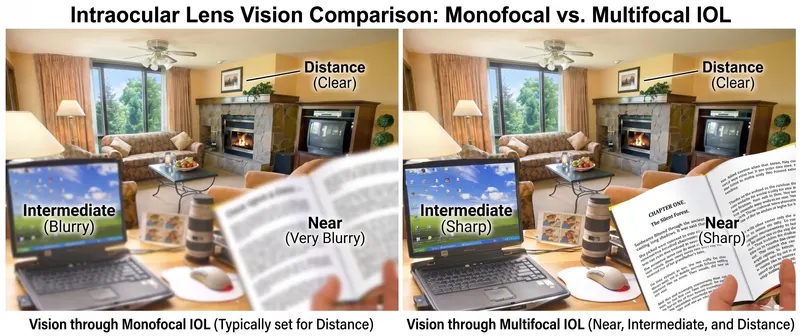
The artificial lens implanted during surgery determines what you'll be able to see after. We offer every major lens category, from basic distance-correction to premium glasses-free options — and we'll help you choose the right one for your life, not just your eyes.

Lens choice depends on your lifestyle, the health of your cornea and retina, and your personal vision goals. Your surgeon will discuss every option with you in detail at the pre-operative consultation.

Comparison of monofocal, EDoF, and trifocal intraocular lens options
Tier 1
Monofocal
मोनोफोकल लेंस
Clear distance vision
Reading glasses still needed
Intermediate vision
The most commonly chosen lens. Corrects distance vision excellently. Glasses needed for near tasks like reading. Indian and imported options available.
Tier 2
Advanced Monofocal
एडवांस्ड मोनोफोकल लेंस
Excellent distance vision
Some intermediate range
Near tasks still need glasses
A step up from basic monofocal. Extended depth of focus gives functional intermediate vision — useful for computers and dashboards — while maintaining sharp distance clarity. Examples: RayOne EMV, Hoya Vivinex Impress.
⭐ Popular Choice
Tier 3
EDoF
ईडॉफ लेंस (दूर और बीच की नजर)
Excellent distance vision
Clear intermediate vision
Fine print may need glasses
Extended Depth of Focus technology delivers a continuous range of vision from distance to arm's length. Ideal for active people who use computers, drive, and want minimal dependence on glasses. Examples: Zeiss AT Lara, J&J Puresee.
✨ Maximum Freedom
Tier 4 — Premium
Trifocal
ट्राईफोकल लेंस (पूर्ण नजर)
Clear distance vision
Clear intermediate vision
Clear near / reading vision
The most advanced lens currently available. Three focal points allow you to see clearly at all distances with minimal or no dependence on glasses. Best suited for healthy corneas and retinas. Examples: Zeiss AT Elana, Zeiss AT Lisa.

Toric variants of all the above lens families are also available for patients with astigmatism. Your surgeon will assess your corneal curvature and recommend accordingly.

Our Technology

The Zeiss Cataract Workflow — From Measurement to Surgery

We operate a fully integrated Zeiss ecosystem. Every piece of data collected before surgery feeds seamlessly into the operating room — ensuring your IOL power is calculated with sub-micron precision and executed with robotic-level consistency.

THE ZEISS INTEGRATED CATARACT WORKFLOW
1
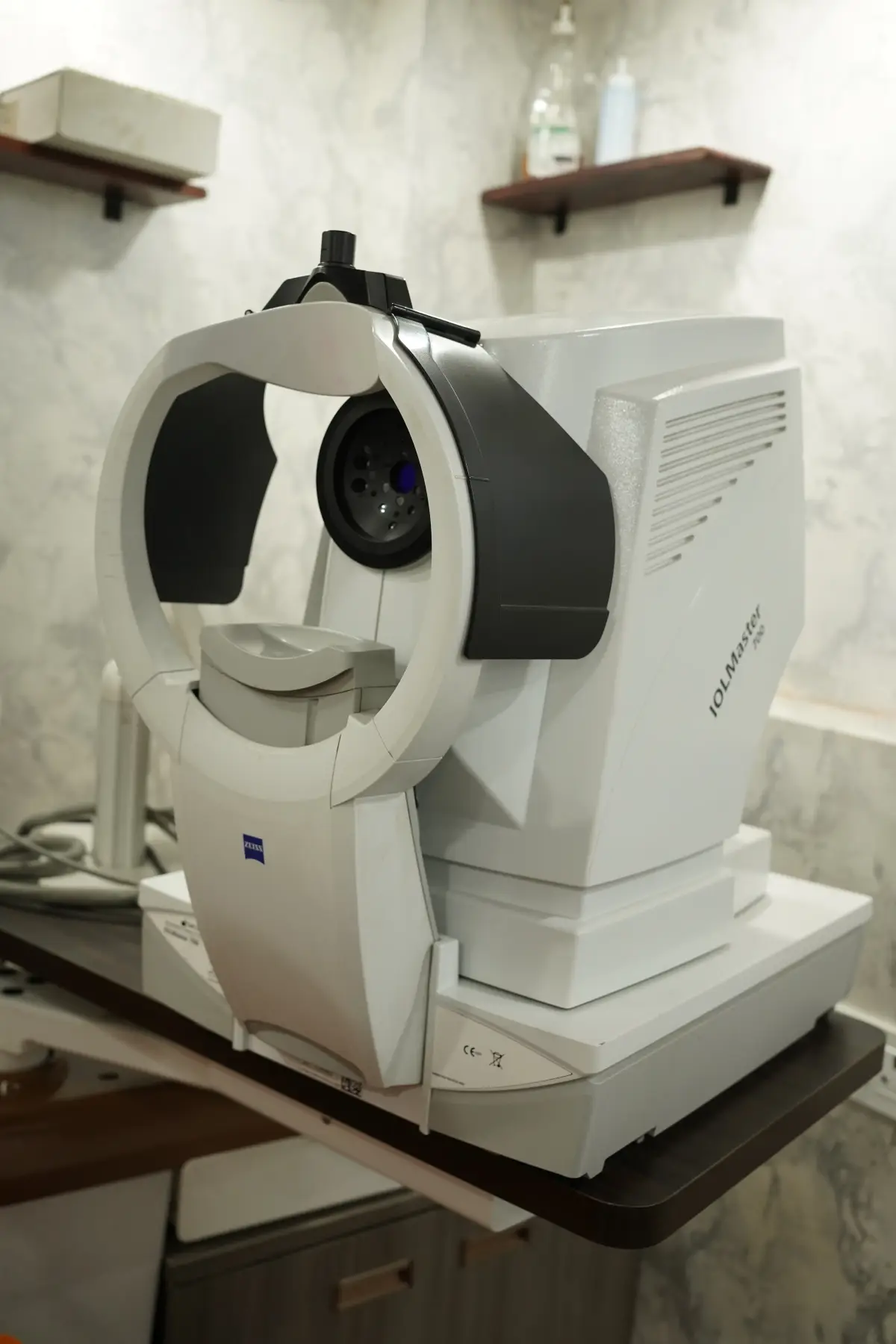
Zeiss IOL Master 700
High-precision optical biometry → calculates your exact IOL power
2
Callisto Eye
Transfers biometry data directly to the operating microscope → digital axis marking for toric lenses
3
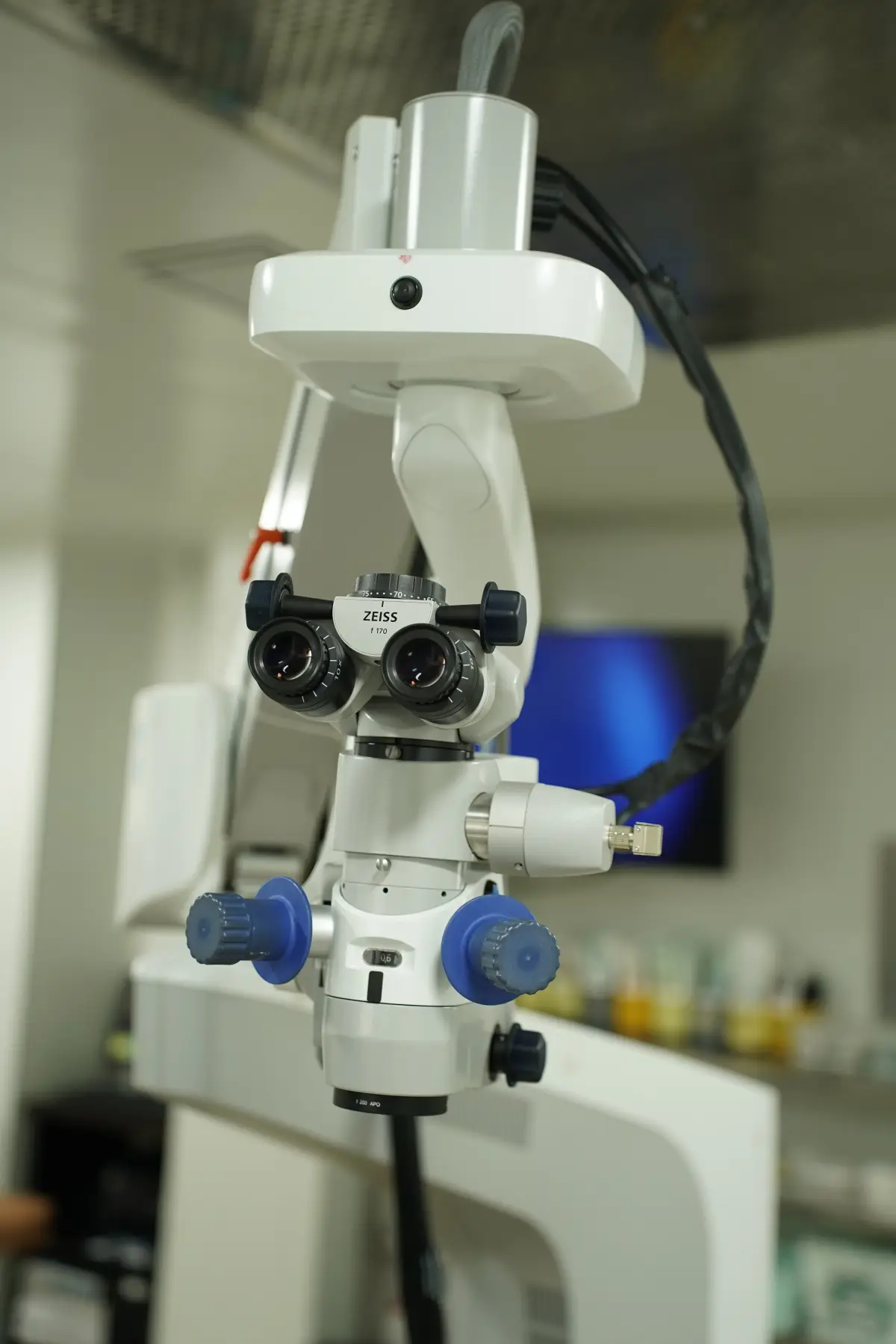
Zeiss Lumera i
Surgical microscope with integrated Callisto Eye overlay → real-time visual guidance during surgery
4
Zeiss Quatera 700
Advanced phacoemulsification platform → precise, gentle removal of the cataract
Zeiss IOL Master 700 biometry
Biometry
Zeiss IOL Master 700
Swept-source OCT biometry — the most accurate lens power calculation technology available today.
Zeiss Quatera 700 in the operating theatre
Surgery
Zeiss Quatera 700
Advanced phacoemulsification system with intelligent energy management for ultra-gentle cataract removal.
Zeiss Lumera i surgical microscope
Surgical Microscope
Zeiss Lumera i
High-luminance surgical microscope with integrated Callisto Eye overlay and outstanding depth of field.
Callisto Eye surgical guidance overlay in the operating theatre
Surgical Guidance
Callisto Eye
Digital surgical guidance overlaid on the microscope view — eliminating manual marking errors for toric IOL alignment.
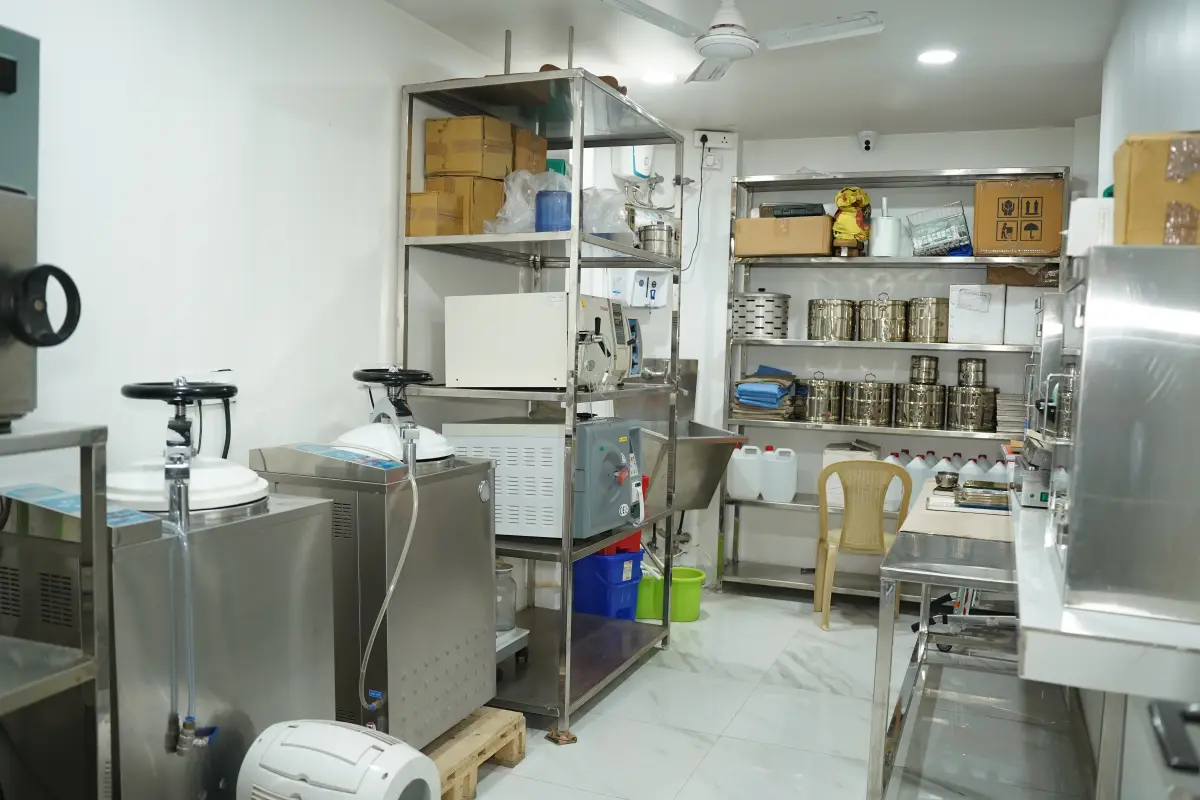
Central sterile supply department (CSSD)
Sterilisation
CSSD — sterile processing
Dedicated sterilisation workflow so every instrument meets the highest infection-control standards.
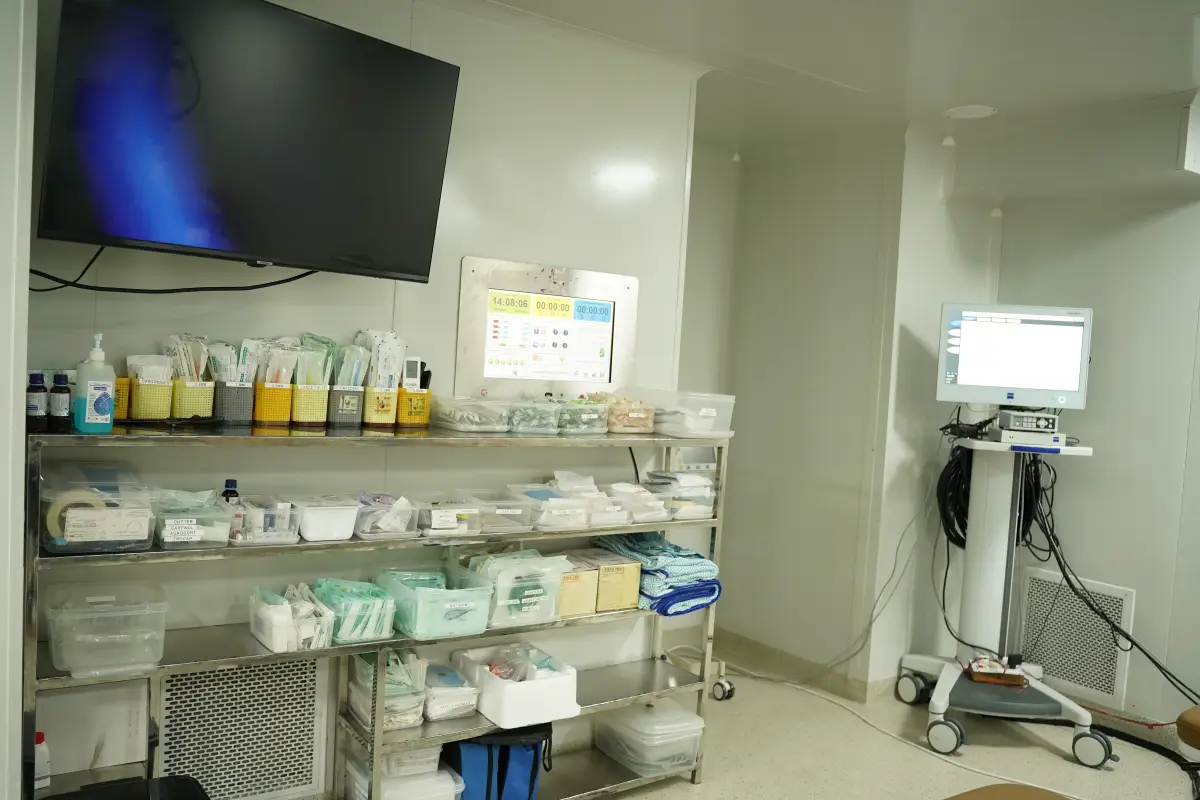
Single-use consumables display
Safety
Single-use consumables
Where clinically appropriate, disposable supplies reduce cross-contamination risk and support transparent, traceable care.
Your Surgeon

Cataract Expertise You Can Trust

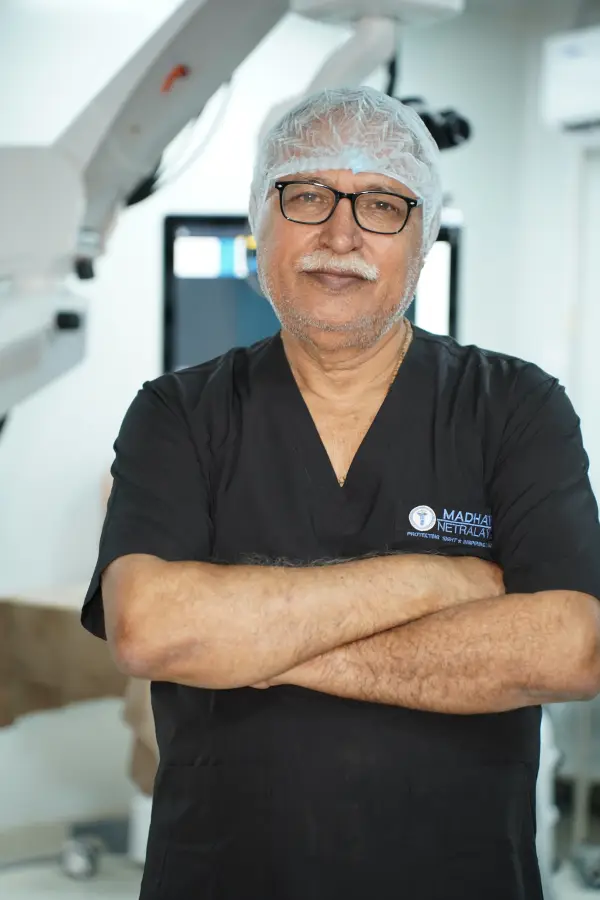
Dr. Kanhaiya Singh
Dr. Kanhaiya Singh
Founder & Senior Consultant

The founding surgeon of Madhavi Netralaya, Dr. Kanhaiya Singh has dedicated over 25 years to providing accessible, honest eye care for the people of Bhojpur. He has performed thousands of cataract procedures and built this institution on a simple principle: every patient deserves the same respect and surgical care, regardless of means.

25+ Years Experience Cataract Surgery General Ophthalmology Founder
"We built this institution on one idea: that no patient should have to leave their hometown for quality eye care."
View full profile →
Dr. Nilesh Kumar
Dr. Nilesh Kumar
Consultant — Cataract, Retina & Glaucoma

Fellowship-trained at India's premier eye institutes in Coimbatore and Kolkata, Dr. Nilesh Kumar returned to his home district of Bhojpur with a clear mission: to deliver the surgical precision of top metropolitan hospitals right here in Ara. He has performed thousands of cataract procedures across all complexity levels — from routine phacoemulsification to complex cases involving small pupils, pseudoexfoliation, dense cataracts, and combined cataract-glaucoma surgeries. He oversees the entire Zeiss surgical workflow at Madhavi Netralaya and personally discusses lens selection with every patient.

Fellowship Trained Advanced Phacoemulsification Complex Cataract Combined Cataract-Glaucoma Premium IOL Implantation Zeiss Quatera 700
"A successful cataract surgery isn't just about removing a lens — it's about understanding what kind of vision this patient needs for their life, and planning for exactly that."
View full profile →
Common Questions

What Patients Ask Us Most

Is cataract surgery painful?

No. We use anaesthetic eye drops — no injections around or behind the eye. You will feel slight pressure during the procedure but no pain. Most patients are surprised by how comfortable and quick it is.

How long does the surgery take?

The procedure itself takes approximately 10 minutes. You will spend around 2–3 hours at the hospital total for preparation, surgery, and a short recovery observation period before going home.

Can both eyes be operated on the same day?

Typically, we operate on one eye at a time, allowing the first eye to stabilise and giving you functional vision during recovery. The second eye is usually done 1–2 weeks later, once the surgeon confirms the first is healing well.

When will my vision improve?

Many patients notice improved brightness and clarity the very next morning. Vision continues to stabilise over 4–6 weeks. A final spectacle prescription is given after the eye has fully settled.

Will I still need glasses after surgery?

This depends on the lens you choose. With a Monofocal IOL, you will likely need reading glasses. With a premium Trifocal or EDoF lens, most patients achieve functional independence from glasses for most daily activities.

Is the IOL permanent?

Yes. The intraocular lens is designed to remain in your eye for life. It does not wear out, does not need replacement, and cannot be felt. Once it is in, you never need to think about it again.

What is YAG capsulotomy? Will I need it?

In some patients (roughly 10–20%), the thin membrane behind the IOL can become cloudy months or years after surgery — called Posterior Capsule Opacification. A simple, painless 5-minute laser procedure (YAG capsulotomy) instantly clears this. It is not a complication of the surgery itself.

Do I need to be admitted to hospital?

No. Cataract surgery at Madhavi Netralaya is a day-care procedure. You arrive in the morning, have your surgery, rest briefly, and return home the same day. No overnight stay is required.

Take the First Step

Ready to See Clearly Again?
Start with a Consultation.

Our cataract work-up is a comprehensive evaluation — optical biometry, baseline OCT, corneal topography, and a one-on-one discussion with Dr. Nilesh Kumar about the best lens option for your vision goals. No pressure, no rush.

Book Cataract Consultation

Or call: 1800-571-9090 (24/7 · Toll Free)